Illustrative report

See how SiteChase turns signals into an approval queue.

This fictional example demonstrates how crawl, local, content, conversion, and AI-readiness findings are separated from recommendations, approvals, and verification.
Illustrative SiteChase sample. This page uses fictional data to demonstrate the review and reporting process. It is not a client case study, ranking promise, or forecast of results.

A practical report—not a pile of exports.

This illustrative review identified twelve signals worth evaluating. Three are high priority because they affect crawl clarity, service relevance, or conversion access. Five are medium-priority opportunities. Four are monitoring items that do not currently justify a change. The report does not predict rankings; it shows how SiteChase separates observation, inference, recommendation, approval, and verification.

Illustrative priority queue

Each item cites evidence, states the proposed purpose, and shows whether approval is required.
PriorityIllustrative signalEvidenceRecommended actionStatus
HighImportant service page is difficult to discover3 internal inlinks · crawl depth 4Add relevant contextual links from stronger pagesApproval required
HighTitle does not clearly identify service and marketRendered title + service mapDraft a clearer, fact-supported titleApproval required
HighMobile conversion path is unclearMobile page reviewImprove CTA prominence without changing claimsApproval required
MediumVisible business facts and schema do not alignPage/schema comparisonAlign structured data to verified visible factsApproval required
MonitorSuspicious backlink pattern observedBacklink researchInvestigate source and history before considering actionMonitor

Show the verified change—not an invented outcome.

A responsible before/after compares technical and usability states. It does not manufacture rankings, revenue, calls, or patient inquiries.
Illustrative before

Service page state

  • 3 internal inlinks
  • Crawl depth 4
  • Generic page title
  • Mobile CTA difficult to locate
Verified after approved work

Implementation state

  • 7 relevant internal inlinks
  • Crawl depth 2
  • Approved title renders
  • CTA works on desktop and mobile

Not claimed: a guaranteed ranking, traffic, or lead increase.

Professional evidence, selected for the question.

Screaming Frog

Technical crawl evidence

Response codes, directives, titles, descriptions, headings, canonicals, internal links, images, and structured-data signals.
Ahrefs + Google

Search and competitor context

Keyword-demand context, competitor observations, backlink patterns, and content opportunities.
Controlled review

Multi-model challenge + human review

Leading AI systems may challenge assumptions and surface alternatives. Human review remains the final gate.

SiteChase independently uses third-party tools and AI services. Product names identify tools used and do not imply sponsorship, certification, or endorsement.

Different views reveal different technical patterns.

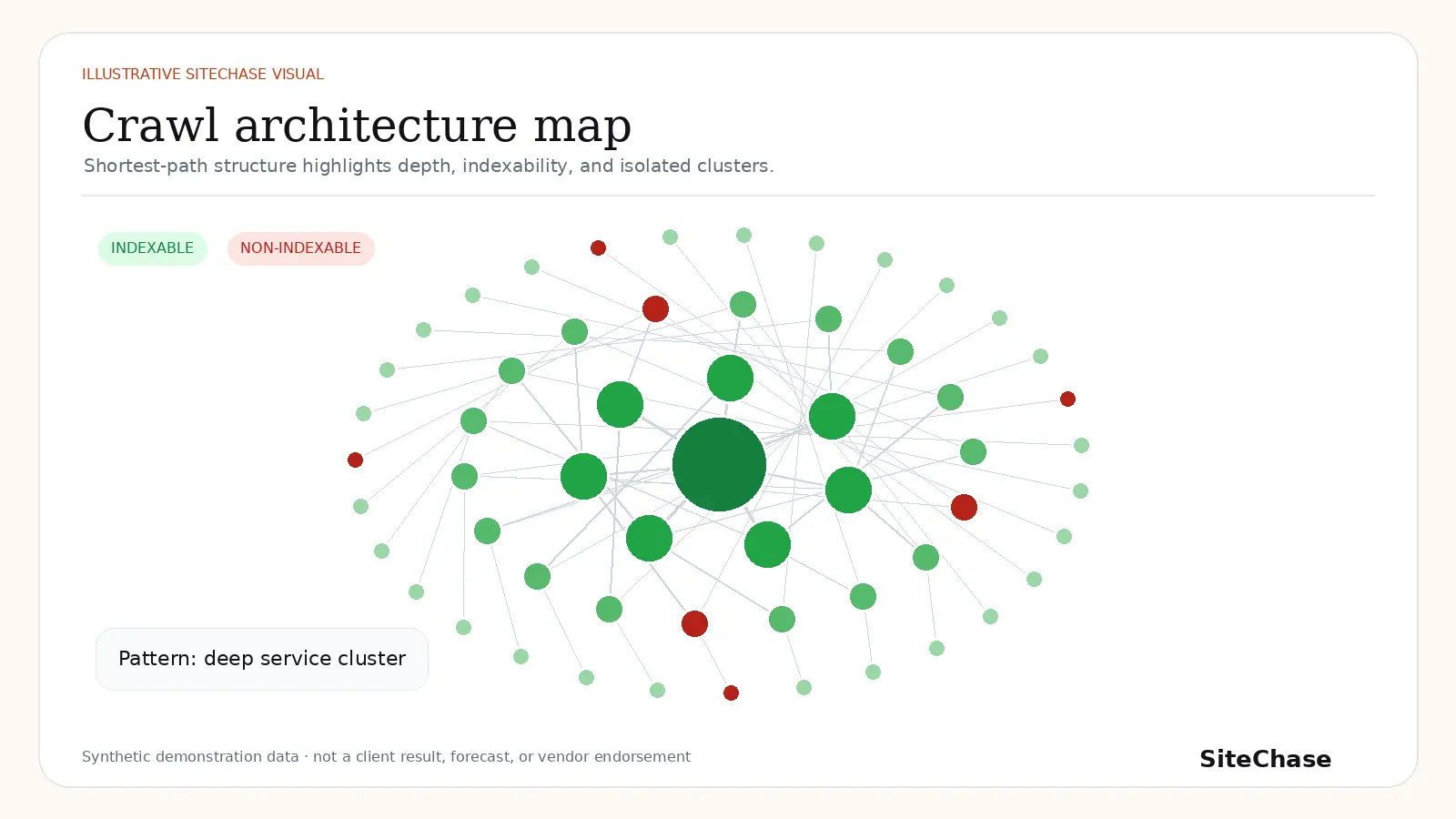
Architecture maps help communicate shortest paths, crawl depth, directory concentration, internal-link flow, and indexability patterns. They support investigation; they do not replace the underlying crawl tables, exports, and human review.
Illustrative crawl architecture network map

Crawl architecture: shortest-path structure, depth, indexability, and isolated clusters.
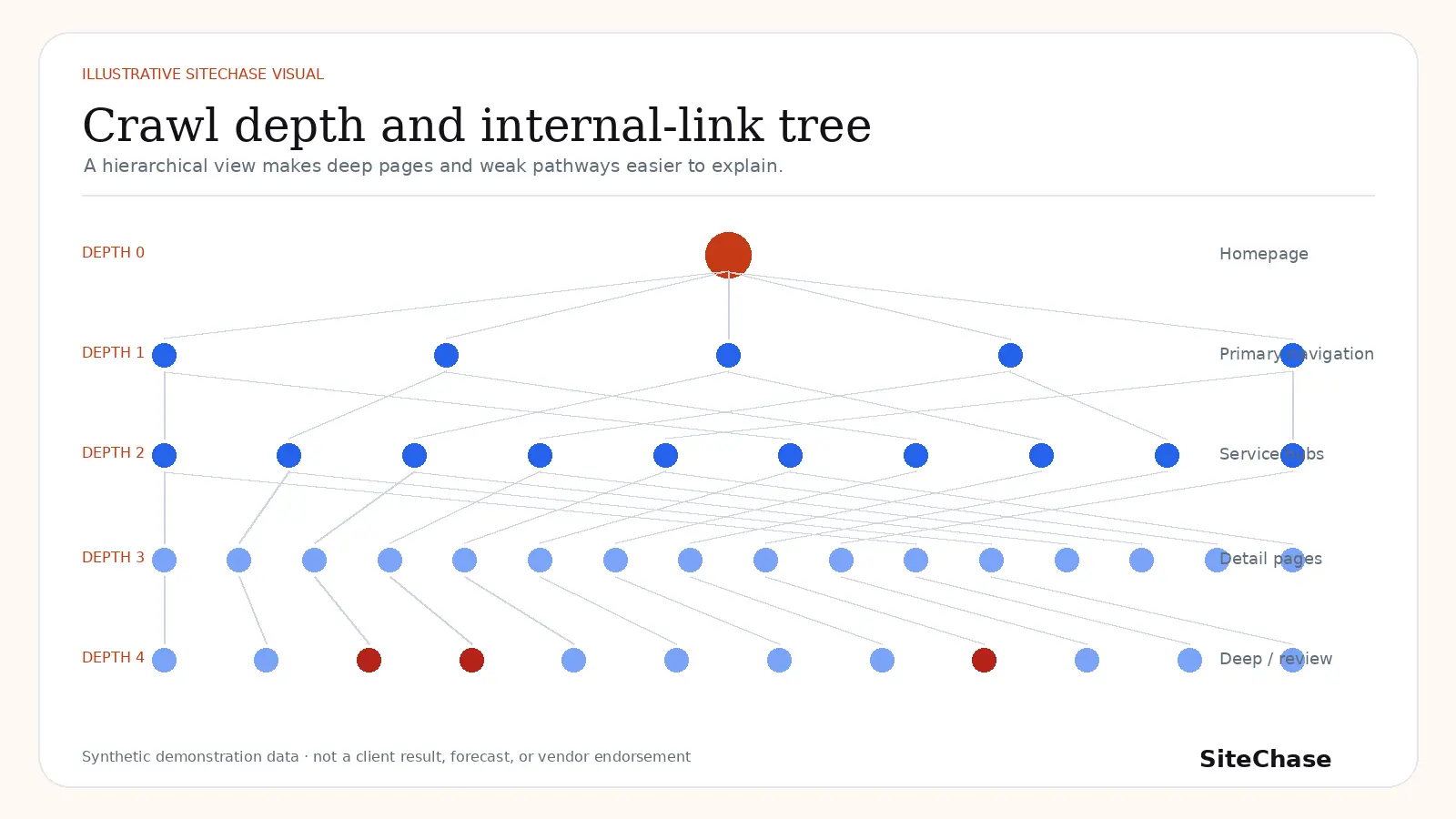
Illustrative crawl-depth and internal-link tree

Crawl depth: hierarchical pathways expose pages that sit too far from primary navigation.
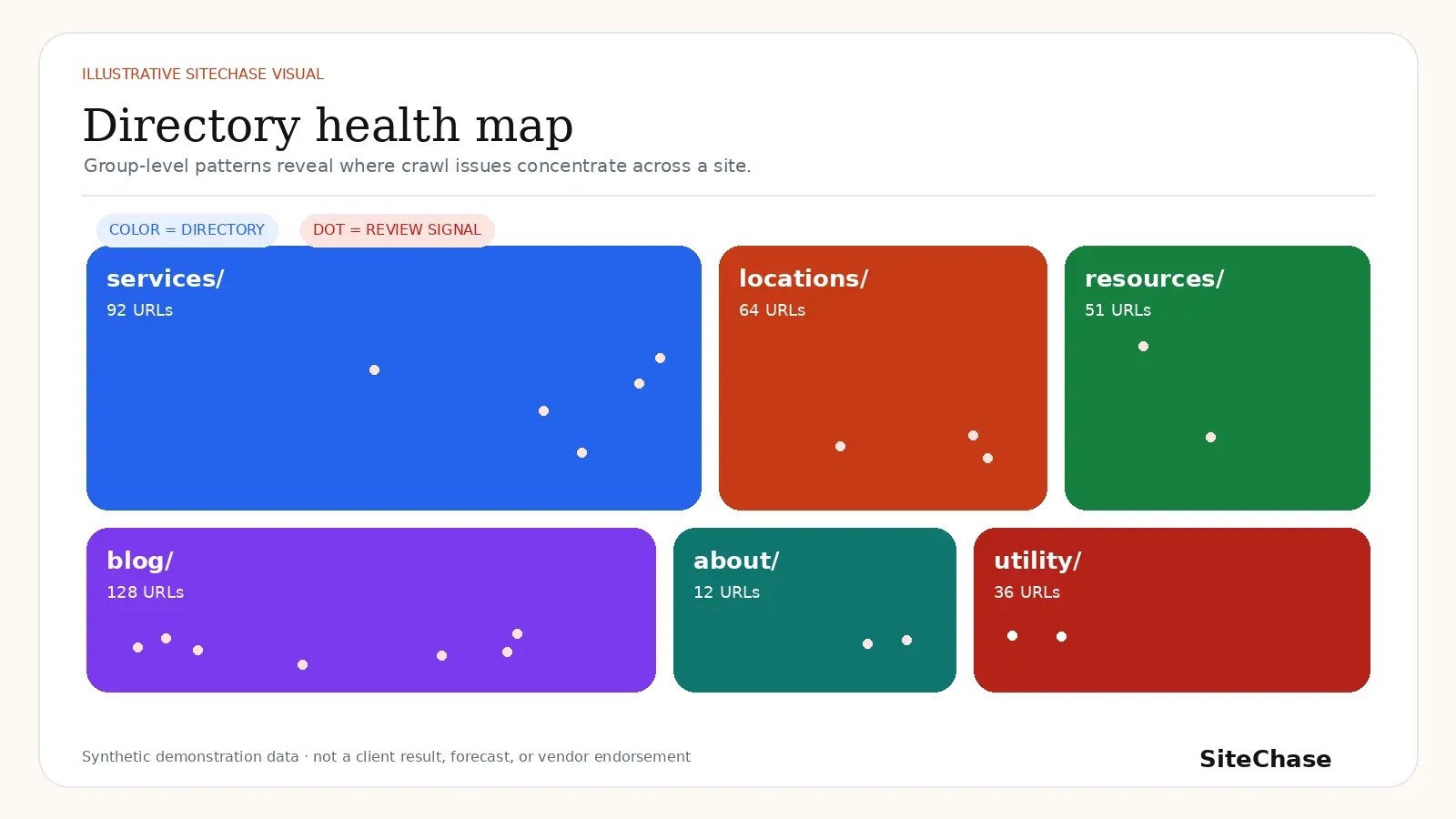
Illustrative directory health map

Directory health: grouped URL patterns show where technical review signals concentrate.
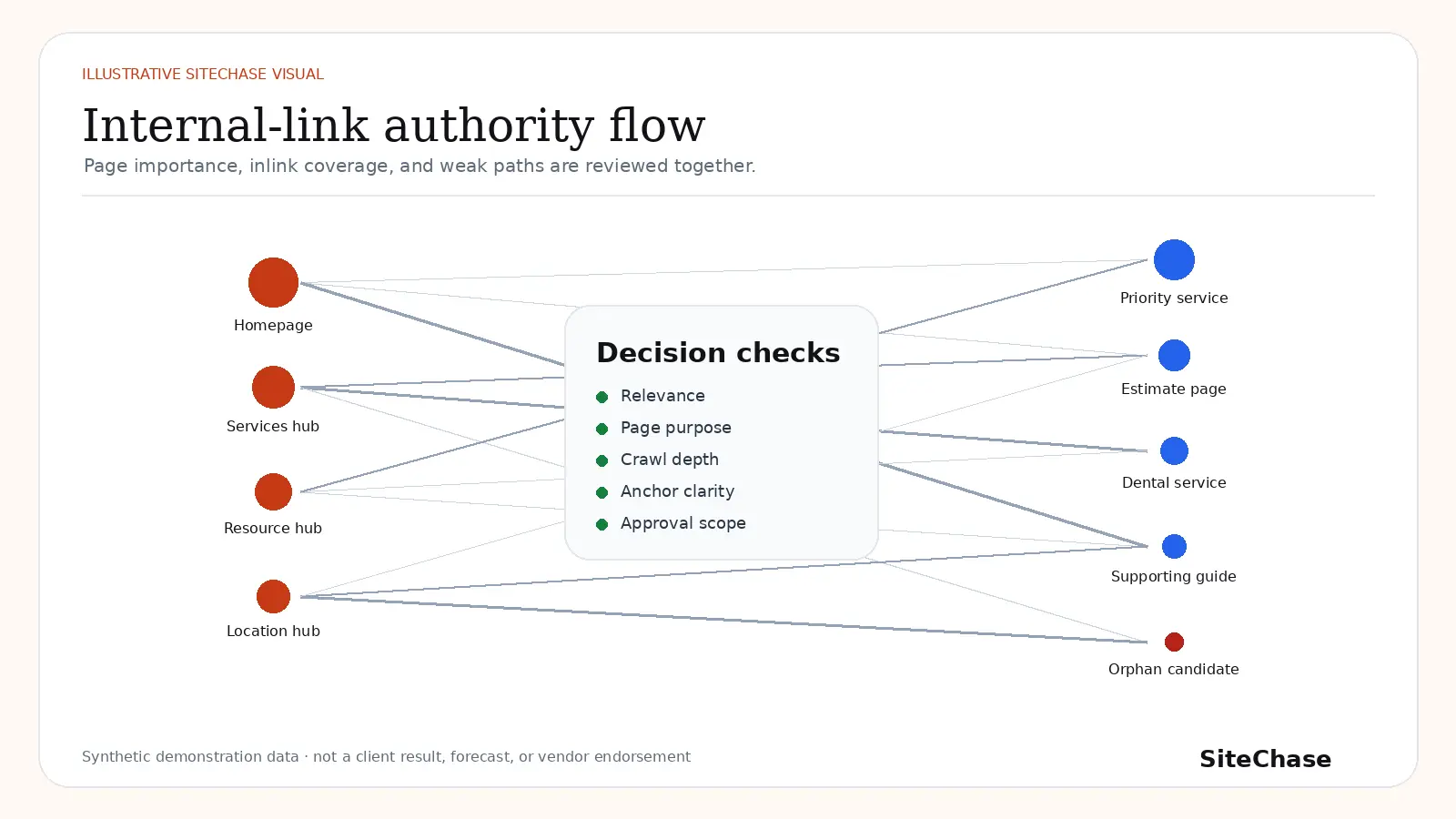
Illustrative internal-link authority flow

Internal-link flow: relevance, purpose, crawl depth, and anchor clarity shape recommendations.
See the evidence in two different formats.

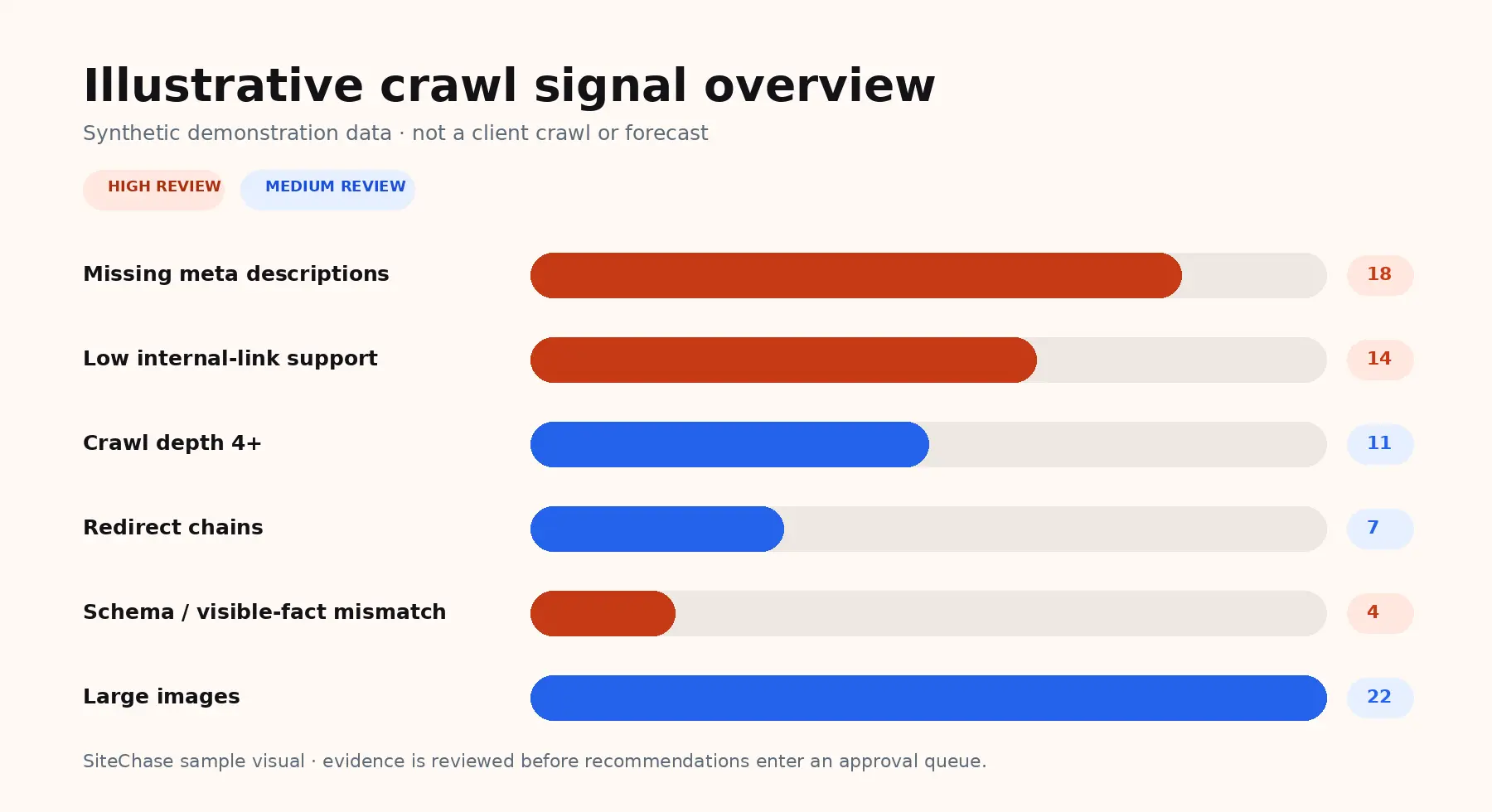
The crawl visual shows how raw technical signals can be summarized. The monthly proof report shows how approved actions, verification, limitations, and next priorities can be documented without inventing business outcomes.
Illustrative synthetic crawl signal overview showing sample review priorities

Illustrative synthetic data. This original SiteChase visual demonstrates how crawl exports can be summarized. It is not a screenshot of a customer account, a client result, or a Screaming Frog endorsement.

Ready to see the priority signals on your own site?

Request a free visibility audit based on public and read-only information. No ranking guarantees and no obligation.