01
Collect
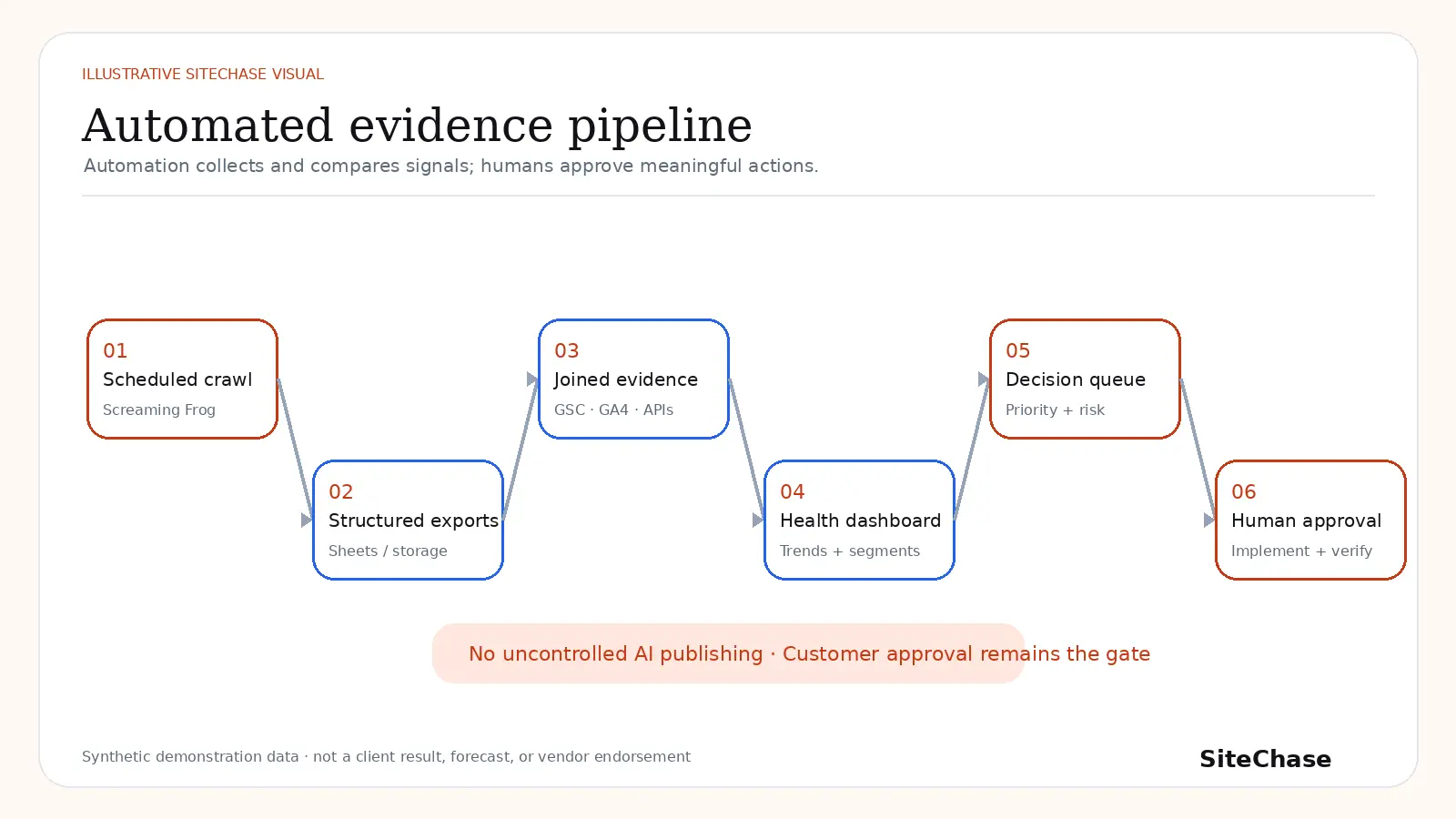
Gather scheduled crawl, search, local, content, and conversion evidence.
SiteChase turns recurring evidence into a controlled sequence of priorities, approved work, verification, and proof—rather than another pile of disconnected reports.
Gather scheduled crawl, search, local, content, and conversion evidence.
Validate data quality, scope, freshness, and likely false positives.
Rank opportunities by impact, confidence, effort, dependencies, and risk.
Apply human judgment, business context, facts, and claim boundaries.
Present meaningful actions with scope, preview, and rollback.
Complete the approved batch while preserving before states.
Check stored state, rendered output, behavior, links, and visual integrity.
Separate completed work, observations, outcomes, and the next queue.
Higher plans can support more frequent review, broader page sets, deeper analysis, more drafting, and greater approved-action capacity. Scope is still defined; implementation is not unlimited.
Review PlansEvidence sources, dates, scope, quality, and limitations.
Approved actions completed, stored state, rendered verification, and rollback status.
Visibility, behavior, local, and business-outcome lanes remain separate.
A contained queue with evidence, expected value, risk, effort, and approval needs.
Start with a visibility audit and see which plan fits the evidence and workload.